 Coder B Dev
I've Used Git for a Decade and Never Knew Hooks Were a Thing
Diff Sniffer started as a suggestion from Claude during a conversation about AI-generated code risk. It checks three things from git metadata: did AI author a commit, did it touch sensitive paths, did a human review it. v0.1 is free on GitHub — building it also taught the author that git hooks exist.
The idea for Diff Sniffer didn't start with me. Claude suggested it, actually — we were talking about the problems companies run into when AI-generated code gets merged into systems that can't afford to break, and it pitched the idea back. I liked it because the problem is real and the fix doesn't need to be complicated: a small team doesn't need a compliance platform, it needs something that just says which AI-written commits touching sensitive code never got a second pair of eyes.
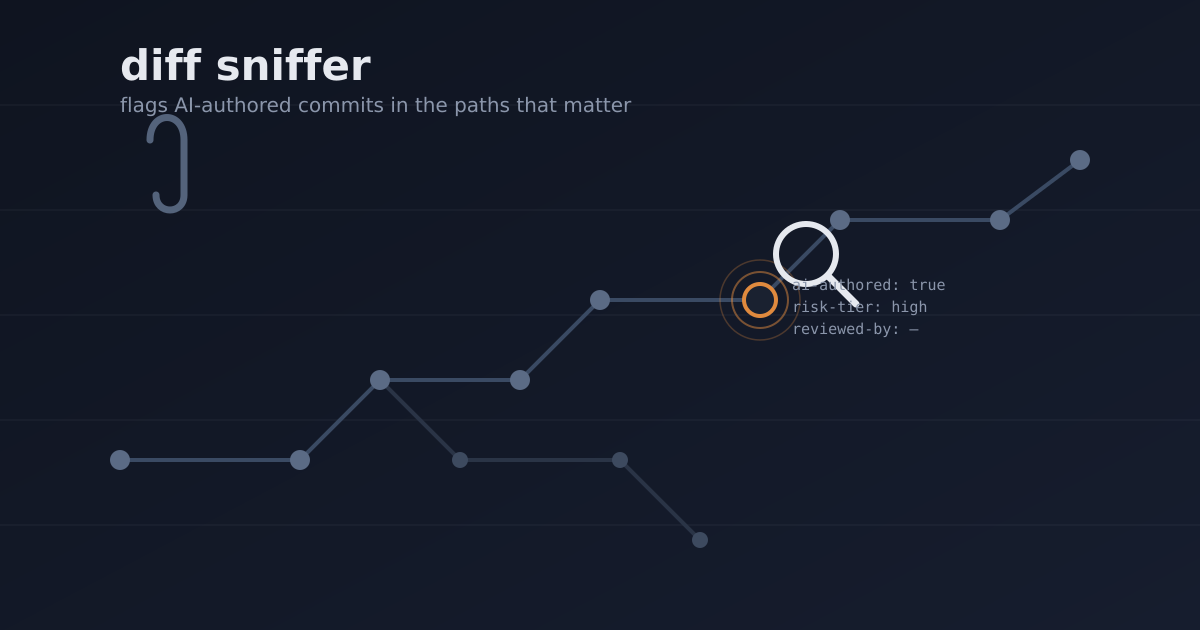
So that's what it checks. Did an AI tool author this commit, did it touch something risky, did a human actually sign off. Three checks, all pulled from git trailers and path globs already sitting in the commit history. No AI in the tool itself — it just reads metadata.
Building the git-hook piece is where I ran into the thing I didn't expect. I've used git daily for close to a decade and never once modified how it behaves. Hooks weren't even on my radar. Post-commit, pre-push — you write a script, git runs it automatically on every commit, no plugin system required. Felt a little ridiculous learning that this late. It's such an obvious extension point in hindsight.
v0.1 is out now, free, on GitHub. It does the three checks and nothing else — no dashboard, no scoring, no AI in the loop. What I don't know yet is what to build next. There's more I could add, but I'd rather hear from people actually using it than guess at what matters. If you try it and something's missing, tell me.